What Color Temperature Is Best for a Garage?
The best color temperature for garage lighting is 4000K to 5000K for most spaces. Pick 4000K for a neutral white in a mixed-use garage, or 5000K for a crisp daylight look over tools and work areas.
On this page (8 sections)
- What color temperature is best for garage lighting?
- What do 3000K, 4000K, 5000K, and 6500K look like?
- Does color temperature affect brightness or color accuracy?
- Which color temperature suits different garage tasks?
- What should you check besides Kelvin?
- Which 5000K shop light fits general garage use?
- How do you avoid glare, mismatched light, and dirty fixtures?
- How should you choose the best color temperature for your garage lighting?
The best color temperature for garage lighting is usually 4000K to 5000K. Choose 4000K for neutral white in a mixed-use garage, or 5000K if you prefer a crisp daylight look while working.
Use warmer light for a garage that doubles as a sitting area, and consider 6500K only if you like a cooler, bluer appearance. Brightness, glare, and fixture placement need separate attention.
What color temperature is best for garage lighting?
4000K to 5000K is the practical starting range for parking, storage, and everyday projects. Your choice within that range should reflect how you use the room and which light appearance you find comfortable.
A garage with exercise equipment or seating may suit the less cool appearance of 4000K. For a space centered on repairs, tools, and a workbench, 5000K is a sensible default.
Keep ceiling fixtures consistent within the same area. Warm and cool fixtures placed next to each other create visible color patches across walls, shelves, and work surfaces.
For a plan that covers fixture types and task lighting, see our complete garage and workshop lighting guide.
What do 3000K, 4000K, 5000K, and 6500K look like?
Lower Kelvin numbers look warmer; higher numbers look cooler. Kelvin describes the color appearance of the light, rather than the heat coming from the fixture.
| Color temperature | General appearance | Best fit |
|---|---|---|
| 3000K | Warm white | Parking, storage, and seating areas where you prefer warm light |
| 4000K | Neutral white | Garages used for a mix of household tasks and hobbies |
| 5000K | Crisp daylight white | Workbenches and garages centered on projects |
| 6500K | Very cool, bluer white | Work areas where you specifically prefer cool light |
Wall paint and nearby light affect how each option looks. A fixture viewed beside a warm household bulb can appear cooler than it does when lighting the garage alone.
Is 5000K or 6500K the best garage lighting color temperature?
Choose 5000K as the default between these two, unless you already prefer very cool light. Moving to 6500K changes the color appearance without guaranteeing better visibility.
Before buying several fixtures, view one in its intended position after dark. Check the bench, floor, and shelves, rather than staring directly at the LEDs.
Use it for the tasks you normally do. If the room feels stark or reflections distract you, change the placement or choose a less cool temperature before expanding the setup.
Does color temperature affect brightness or color accuracy?
Lumens measure light output, while Kelvin describes its color appearance. Neither number alone tells you how well you will see small parts or judge a painted surface.
A high-output fixture can still leave shadows if a parked car or tall shelf blocks its light. Several well-placed fixtures may cover the room more evenly than one bright source.
Start with our guide to how many lumens a garage needs. Then use how many shop lights a garage needs to turn that output goal into a layout.
Color rendering is another separate factor. If you match paint, finishes, or colored wires, check the fixture's color rendering index, or CRI, rather than assuming a daylight label means accurate colors.
A higher CRI generally helps colors appear more natural, but it does not replace enough light on the task. For finish matching, also inspect the material under the light where it will eventually be used.
Which color temperature suits different garage tasks?
Choose the appearance for the room, then add light where the task needs it. You do not need a colder ceiling color just because one bench needs more illumination.
Is 3000K good for parking and storage?
3000K suits people who want a warmer garage, especially when the space connects visually to warm-lit rooms. It can also work for seating or casual hobbies.
Read storage labels and check floor obstacles when assessing the setup. If those areas are dim, improve coverage rather than assuming the warm color is the cause.
Is 4000K good for a mixed-use workshop?
4000K suits a garage that shifts between parking, exercise, and projects. Its neutral appearance offers a middle ground for people who find warmer light too yellow and cooler light too stark.
Choose this range if comfort across several activities matters more than a distinctly cool workshop look. None of the 3 fixtures below offers this temperature, so choose another model if neutral white is your priority.
Which fixture suits a workbench that needs high output?
The Hykolity 4FT 120W Linkable LED Shop Light suits a work area that needs substantial output from each fixture. It delivers 13,000 lumens at 5000K and draws 120W.
Choose it when your layout calls for fewer, higher-output fixtures. Skip it for a small, low-ceiling area where a bright source would sit close to your eyes.
It supports hanging or flush mounting and links up to 3 units. Plan around its 60.2-inch power cord and 10-inch pull-chain switch so the connection and control remain accessible.
Position the fixture to light the work surface without reflecting directly off shiny tools. More output cannot remove a shadow cast by your body, so placement still matters.
What should you check besides Kelvin?
Check coverage, glare, controls, and power access before ordering. These details determine whether your chosen fixture fits the garage as well as your preferred light color.
How far apart should garage shop lights be?
Spread fixtures across useful work zones, rather than placing every light down the center above a parked car. Include shelves and side benches in the plan.
Use our guide to LED shop light spacing to plan the layout. Account for the open garage door and its tracks before marking mounting points.
Measure cord routes along their actual path, including any vertical drop. Our guide to hanging LED shop lights covers the mounting step.
Who should choose the cooler BBOUNDER fixtures?
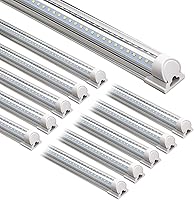
The BBOUNDER 4FT LED Shop Lights 10-Pack suits readers who want a distinctly cool appearance across several work zones. Each fixture provides 4400 lumens at 6500K and draws 40W.
Choose this set for a coordinated cool-white layout, rather than adding isolated fixtures among warmer ceiling lights. Skip it if the garage doubles as a relaxing space and you already dislike blue-toned light.
The fixtures allow ceiling mounting or suspension and include mounting hardware with a 56-inch power cord. You can link up to 4 lights, so the full pack needs separate groups if you use every fixture.
A 10-pack is useful only if the layout needs that many lights. Decide the fixture count before choosing a pack size.
Which 5000K shop light fits general garage use?
The Hykolity 4FT Linkable LED Shop Lights 10-Pack suits garages where several moderate-output fixtures can spread light across parking, storage, and benches. It is a practical choice when you want a consistent daylight appearance throughout the room.
Each fixture provides 4400 lumens at 5000K and draws 42W. Hanging chains and mounting screws allow suspended or surface installation.
Choose this set when your plan needs multiple light sources to reach around shelves and vehicles. Skip it if you need only one fixture or want warm or neutral white.
Plug connections link up to 6 units, and each fixture has a 59-inch power cord with a push-button switch. Plan separate groups for the full pack and keep switches within reach.
Hykolity backs these lights with a 5-year warranty. For other fixture formats and pack sizes, compare the best LED shop lights.
How do you avoid glare, mismatched light, and dirty fixtures?
Place lights carefully and keep them clean before changing color temperature again. Glare and dusty surfaces can make an otherwise suitable setup harder to use.
Avoid putting a bright fixture directly in your normal sightline at the bench. Light the task from a position where your head and hands do not block it.
For work inside cabinets or under a vehicle, use a movable light instead of increasing ceiling output. Our guide to choosing a rechargeable work light explains the options.
Disconnect power and let fixtures cool before cleaning them according to their instructions. Use the recommended cloth or brush, and avoid spraying cleaner into electrical parts.
When adding fixtures later, match the Kelvin value and preferably the same model within a row. Even lights with the same stated temperature can differ slightly in appearance.
How should you choose the best color temperature for your garage lighting?
Choose by room use first, then fixture output and layout. For a mixed-use garage, start with 4000K; for a project-focused space, choose 5000K unless you strongly prefer warmer or cooler light.
Pick the Hykolity 10-pack for distributed daylight lighting, BBOUNDER for a deliberately cooler setup, or the Hykolity 120W fixture where your plan needs higher output per light.
The best color temperature for garage lighting will not fix poor placement. Before ordering, use our LED shop light spacing guide to check where each fixture will send its light.
Frequently asked questions
What color temperature is best for garage lighting?
The best color temperature for garage lighting is usually 4000K to 5000K. Choose 4000K for neutral white in a garage used for parking, storage, and hobbies, or 5000K for a crisper daylight appearance.
Keep ceiling fixtures consistent within each area, then add focused light where you work.
Is 5000K or 6500K better for a garage?
5000K is the better starting point for a garage used for several tasks, while 6500K suits people who prefer a cooler, bluer appearance. A higher Kelvin number does not mean more light.
Compare lumens separately, and view one fixture in your garage before committing to a full set.
Is 3000K too warm for a garage?
3000K is not too warm for a garage used mainly for parking, storage, or relaxing. It gives the room a warmer appearance than neutral or daylight white.
For small parts and close work, add a task light and position it so your hands do not block the light.
Does color temperature make a garage brighter?
Color temperature changes the appearance of light, while lumens describe how much light a fixture emits. Cooler light can look crisp without delivering more useful light to a bench.
To improve visibility, check output, fixture placement, glare, and shadows before replacing lights solely to get a higher Kelvin number.