How to Choose a Rechargeable Work Light
Choose a rechargeable work light by matching the beam and mounting options to your task, then check battery compatibility and runtime. Pick a spotlight for distant targets, a flood light for a wider work area, or a small task light for close repairs.
On this page (10 sections)
- What beam suits your rechargeable work light task?
- How bright should a cordless work light be?
- Which mounting options make hands-free work easier?
- How long should the battery last?
- What battery platform should you choose?
- Can one portable light cover a whole garage?
- What should you check before the first job?
- How do you care for a cordless work light?
- Which buying mistakes are easiest to avoid?
- Which rechargeable work light should you choose?
Choose a rechargeable work light by matching its beam and mounting options to the job, then check battery compatibility and runtime. A spotlight suits distant targets, a flood light covers a wider work area, and a small task light helps with close repairs.
Start with where the light must land and where the lamp can safely sit. A useful beam from the right angle often matters more than the largest lumen number.
For fixed garage lighting, see our garage and workshop lighting guide. A portable light adds light where your body, shelves or equipment block the ceiling fixtures.
What beam suits your rechargeable work light task?
Choose a spotlight for distance and a flood or task light for nearby work. Think about the area you need to see, including the tools and obstacles around the main target.
For a bench repair, you need enough spread to see parts without moving the lamp after every step. For checking a far corner or looking along a long work area, a directed beam makes more sense.
Don't mistake a head's pivot angle for its beam width. A head that turns through 90 degrees changes where you can aim the lamp; that number doesn't describe how wide its light spreads.
DeWalt DCL043: choose it for distant targets
The DeWalt DCL043 suits someone who needs a handheld spotlight that can also be set down and aimed. Its 90-degree pivoting head lets you change direction while the light stands on its base.
It produces up to 1,500 lumens and has 2 brightness settings. Use the lower setting when you need less output or want to stretch the battery through a longer session.
A belt hook and integral hook give you more placement choices when a flat surface isn't available. Check the support before hanging the light, especially where movement could swing the beam away from your work.
Choose this model for directing light toward a particular spot rather than spreading it around a bench. Skip it as your main choice for broad surface work if a flood light better matches the area.
DeWalt describes visibility at up to 508 yards, but visibility distance isn't the same as useful detail at that distance. Don't use that figure to judge whether you'll be able to read a label or inspect a small part.
Milwaukee 2361-20: choose it for a wider work area
The Milwaukee 2361-20 suits M18 users who want flood lighting and several ways to hang it. Its 1,500-lumen output fits a different role from the spotlight above: illuminating an area around the task.
Its EMT, keyhole, crossbar and handle hangers give you options when floor or bench space is limited. The octagonal shape also allows placement at multiple angles.
That makes it worth considering for work areas where the available support changes from job to job. Before buying, picture the actual bar, hook or surface you'll use, rather than counting mounting features alone.
Milwaukee describes the roll cage as protection for demanding jobsite conditions, and the lens is impact resistant and replaceable. Secure placement still matters, especially above a work surface or walkway.
Skip this model if your main need is a light to carry and aim at distant targets. It also needs a separate M18 battery and charger, which matters if you're starting without cordless tools.
How bright should a cordless work light be?
Choose enough light at the work surface, with room to turn it down for close tasks. Lumens measure total output, so compare beam shape and placement alongside the number.
A concentrated beam and a broad beam can have the same lumen output yet serve different jobs. Distance matters too: moving a light closer can help, provided it doesn't create glare or block your hands.
For shiny metal, glossy paint or pale surfaces, excessive brightness can make details harder to see. Start lower, adjust the angle, then increase output if the task still looks dim.
Compact DeWalt rechargeable work light: choose it for flexible placement
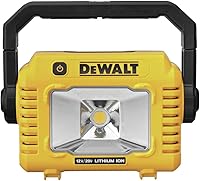
The compact DeWalt task light suits nearby work that changes height or position. The product above retains its DCL510 display name, but the model associated with this ASIN is DCL077B.
It offers up to 2,000 lumens, 3 brightness settings and a natural daylight hue. That combination suits a buyer who wants one task light for both a larger work surface and closer jobs.
Its handle rotates through 360 degrees for different orientations. That describes handle movement, rather than a promise of light coverage in every direction.
The 5/8-inch-11 and 1/4-inch-20 tripod mounts make it a useful choice when the lamp needs to sit above a crowded bench. Confirm the stand connection and leave space for its legs before choosing that setup.
The tool weighs 2.8 lb without a battery, so include the battery when judging carrying comfort and placement. Its IP54 protection is useful for dust and splashes, but it isn't a reason to leave it exposed to unrestricted water.
Skip this option if you mainly need a distant-target spotlight. For a closer look at the spotlight alternative, read our DeWalt DCL043 review.
Milwaukee 2735-20: choose it for close tasks
The Milwaukee 2735-20 suits M18 users who need a lower-output light for a focused nearby job. Its adjustable head and integrated hook let you aim it while keeping both hands free.
Consider it for looking inside a cabinet, checking a connection or working beside a larger light. These jobs call for light in a small space rather than illumination across the whole room.
Its output figures conflict between 100 and 160 lumens, so choose it for its close-task role rather than a precise brightness comparison. Both figures place it well below the broader lights in this guide.
Milwaukee claims up to 10 hours of runtime with a 5 Ah battery. That gives the claim a useful battery reference, though your work plan should still allow for recharging.
Skip it as the only light for a broad bench or general garage work. A hook and movable head help aim the beam, but they don't turn a small task light into area lighting.
Which mounting options make hands-free work easier?
Choose a mounting method that puts the light beside or above the task securely. Start with the space you have, then select a base, hook or stand that fits it.
A base works well when you have a clear shelf or bench edge. Leave room for your hands and materials so the lamp doesn't need to move every time you turn the workpiece.
A hanging light can free that surface, but the support must hold it securely. Don't hang a lamp from a loose wire, pipe fitting or moving part simply because the hook fits.
A tripod helps when there's no useful shelf at the right height. It also takes floor space, so check whether its legs will interfere with your stance, a doorway or the route around a vehicle.
If height adjustment is central to your job, compare options in our work lights with stands guide. Check the mount connection and the stand's load limit before pairing separate items.
How should you position a rechargeable work light?
Place the light off to one side of your hands, then adjust until the working area is clear. Standing directly between the lamp and your task creates a shadow that extra output won't solve.
For flat inspection work, try light from a shallow side angle to make surface texture easier to see. For reading markings, aim to reduce reflections rather than point the beam straight back toward your eyes.
Check the view from your actual working position before starting. A lamp that looks well aimed while you're standing may shine into your face once you kneel or lean over.
How long should the battery last?
Choose runtime for your longest normal session, with a plan for an unfinished job. An occasional repair and an evening of workshop work place different demands on the battery.
An “up to” runtime is a maximum claim, not a promise for every battery or setting. Compare the brightness mode and battery capacity behind it before treating 2 lights as equal.
Milwaukee claims up to 8 hours for the 2361-20. Without a matching battery-capacity reference, don't directly compare that figure with the smaller Milwaukee light's claim.
Higher-capacity batteries generally offer more stored energy within the same compatible system, but they also add weight. Amp-hour figures alone aren't a fair runtime comparison across different voltages and lights.
For short jobs, charging after use may be enough. For long sessions, decide whether you'll pause to recharge, swap in a compatible spare, or have another source of light ready.
Don't count a tool battery as available if it's also powering the tool you need for the job. Plan which batteries must work at the same time.
What battery platform should you choose?
Choose a battery system you already use when it offers the beam and placement your work needs. Sharing batteries and a charger can reduce the equipment you need to keep ready.
The DCL043 uses DeWalt 20V MAX batteries and comes without a battery. The compact DCL077B is a bare tool compatible with DeWalt 12V MAX, 20V MAX and FLEXVOLT batteries.
Both Milwaukee lights use M18 batteries. A brand name or similar voltage doesn't make a battery interchangeable with another family.
Before ordering, check the exact battery family, a suitable charger and the package contents. For the 2735-20, confirm whether your chosen package includes the equipment you need.
If you own no cordless tools, compare the whole setup rather than just the lamp. Consider charging space, how often you'll use it and whether you want more tools in that system later.
Our Milwaukee vs DeWalt work light comparison can help with that broader choice. Battery sharing is useful, but it shouldn't steer you toward the wrong beam for your main task.
Can one portable light cover a whole garage?
A portable light works best as task lighting alongside general lighting. It can fill a shadow under a shelf or brighten a repair area without lighting the entire garage evenly.
Using one bright lamp for everything can leave dark areas behind you and glare in front of you. That becomes awkward when you repeatedly move between a bench, storage shelves and a vehicle.
If you need broad coverage every time you enter the garage, plan fixed fixtures first. Use our guide to garage lighting levels to separate room lighting needs from local task lighting.
For an occasional job away from an outlet, a movable lamp may be enough. Keep its beam on the work and make sure you can still see the walking route around it.
What should you check before the first job?
Set up the battery, support and beam before starting work. A few minutes of preparation keeps you from interrupting a repair to find a charger or rearrange the light.
- Charge a compatible battery using the correct charger and its instructions.
- Check the lamp, lens, battery housing and contacts for visible damage.
- Seat the battery fully and place the light on its intended support.
- Aim from your working position, starting with a lower brightness setting if available.
- Move your hands through the work area to check shadows and clearance.
- Keep a clear route to the light so you can adjust or switch it off safely.
If the support wobbles or the light slips as you adjust it, move it before beginning. Don't rely on a carefully balanced position near an edge.
For overhead placement, use the light's intended mounting features and follow its instructions. Keep the lamp clear of moving equipment and anything that could knock it loose.
How do you care for a cordless work light?
Keep the lens clean and the battery dry, and follow the charging instructions for the battery system. Dirt on the lens can reduce useful light and encourage you to use more output than necessary.
Switch the lamp off and remove the battery before cleaning. Use a soft cloth and the recommended cleaning method; avoid abrasive pads that can scratch the lens.
Clear debris from around the battery connection without using metal tools on the contacts. Don't charge a battery that's visibly damaged, leaking or unusually hot.
Let a hot battery cool as directed before charging it. Store the light and battery away from excessive heat, moisture and loose metal objects that could touch the contacts.
Check a stored light before the next planned job rather than assuming it's ready. A charged spare is useful only if you know where it is and it fits the lamp.
Which buying mistakes are easiest to avoid?
The biggest mistake is buying output before deciding placement. A powerful lamp still fails the job if your body blocks its beam or there's nowhere safe to put it.
Another common mistake is treating every cordless light as a complete rechargeable kit. A bare tool needs the right battery and charger before it can help you.
Don't buy a spotlight for broad bench coverage just because its reach sounds impressive. Likewise, don't expect a small hooked light to illuminate a large work area.
Avoid choosing runtime from the longest advertised number alone. Battery capacity, brightness and the amount of useful light you need all affect the decision.
Finally, don't overlook the light's position after a task changes. Re-aiming it as you move is often more useful than leaving it in place at maximum brightness.
Which rechargeable work light should you choose?
Choose the rechargeable work light that solves your hardest placement problem, then confirm its beam and battery fit. Picture the exact job and where the light will sit before making the final choice.
- Choose the DeWalt DCL043 for directing a spotlight toward a specific or distant target. Skip it when wide nearby coverage is the priority.
- Choose the compact DeWalt DCL077B for nearby work that benefits from brightness adjustment and tripod placement. Skip it when you mainly need spotlight reach.
- Choose the Milwaukee 2361-20 for wider work-area lighting with several hanging options. It makes the most sense when you already have suitable M18 equipment.
- Choose the Milwaukee 2735-20 for close repairs where a small, aimable light can stay beside the task. Skip it as your only source of broad work-area light.
Before you order, settle 3 details: where it will mount, which battery will power it and how you'll finish if that battery runs low. For more choices within those roles, see our best rechargeable work lights roundup.
Frequently asked questions
What should I look for in a rechargeable work light?
Start with the beam shape and a secure way to aim it at your work; then check battery compatibility, package contents, brightness settings and runtime for your session length. A light that hangs beside the task can be more useful than a brighter model you must hold.
How many lumens should a rechargeable work light have?
Choose output for the size and distance of your task, rather than buying the highest lumen count. Close repairs need controlled light, while a wider work area needs broader coverage; adjustable brightness helps you reduce glare nearby and save battery power when full output is unnecessary.
Are rechargeable work lights sold with batteries?
Some include batteries, but tool-only and bare-tool models require separate equipment; check for both a compatible battery and charger before ordering. If you already use cordless tools, confirm the exact battery family rather than relying on the brand name or voltage printed on the light.
Can a rechargeable work light replace a headlamp?
A work light can replace a headlamp for a stationary task when you can aim it from a secure position; a headlamp follows your gaze as you move between spaces. For detailed work, a separate light placed to one side can also reveal surface shadows that frontal light hides.
What is the difference between a spotlight and a flood light?
A spotlight directs light toward a specific target, while a flood light spreads it over a wider area. Choose the spotlight for looking farther down a path or work area; choose the flood light when you need to see a nearby surface, your tools and the space around them.