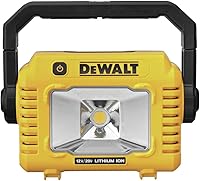
DeWalt DCL043 Work Light Review: Worth It? (November 2026)
The DeWalt DCL043 suits targeted cordless lighting, especially if you already use compatible 20V MAX batteries. Choose an area light instead for nearby bench work or lighting several work surfaces.
On this page (9 sections)
- Who should buy the DeWalt DCL043?
- What does the DCL043's beam distance mean?
- How do the DCL043 and DCL050 differ?
- Which alternative works better for area lighting?
- What should you check before buying the DCL043?
- How should you set up the DCL043 for a task?
- Which work-light mistakes should you avoid?
- How do you care for a cordless work light?
- Should you choose the DeWalt DCL043 or an alternative?
The DeWalt DCL043 is a good choice for targeted cordless lighting, especially if you already use compatible DeWalt batteries. Choose a different format if your main job is lighting a bench, spreading out tools or seeing several work surfaces at once.
The key decision is where the light needs to land. A spotlight helps you aim toward a specific target; an area light makes more sense when your attention moves across a wider workspace.
This review explains where the DCL043 fits, how to position it and which alternative suits a different job.
Who should buy the DeWalt DCL043?
Buy the DCL043 for aimed light on a specific jobsite target and the option to set it down while you work. Skip it as your first choice for broad bench lighting or a setup that needs a tripod.
DeWalt DCL043 20V MAX Spotlight: Best for distant targets

- 1,500 lumens
- Beam visible up to 508 yards
- 90-degree pivoting head
- 2 brightness settings
Choose this cordless spotlight when you need to aim at a specific target rather than spread light across a bench. Its standing base and hooks offer several ways to keep your hands free.
Pros
- Two brightness settings
- Stands on its base with a pivoting head
- Belt hook and integral hook
- Over-molded lens cover
Cons
- Spotlight format favors targeted lighting
- Battery is not included
Its 4 LEDs produce up to 1,500 lumens, with 2 brightness settings for maximum output or longer run time. The head pivots 90 degrees, so you can change the aim while the light stands on its base.
A belt hook and integral hook add carrying and hands-free placement options. DeWalt says the over-molded lens cover improves durability and provides a non-marring surface.
Those features suit someone who moves between targets and needs different ways to place the light. They also help when holding a flashlight would leave too few hands for the job.
When does the DeWalt DCL043 make sense?
The DCL043 makes sense when the target matters more than the surrounding area. Examples include checking a distant point across a work area or directing light toward a particular section of a dark space.
It also fits a mixed lighting setup: fixed lights cover the room, and the spotlight reaches the part that needs attention. You don't have to ask one portable light to handle both jobs.
Skip it if most of your work involves sorting small parts across a bench. A nearby area light is a better starting point for that pattern of work.
What does the DCL043's beam distance mean?
DeWalt's 508-yard visibility claim describes how far away the beam can be seen, not the distance at which you can complete detailed work. Use the size and detail of your target to judge useful placement.
Lumens describe total light output, while beam shape affects where that light goes. Two lights with the same lumen figure can serve different jobs if one concentrates light and the other spreads it out.
For inspection work, ask whether you can distinguish the detail you need, rather than merely see a bright patch. A visible object may still need closer lighting before you can read a label or identify a small fastener.
At short range, aim can matter as much as output. A bright reflection from polished metal can hide detail, so move the light to the side before increasing brightness.
Don't use the distance claim to plan garage coverage. Our guide to how many lumens a garage needs explains the separate task of lighting a whole room.
How do the DCL043 and DCL050 differ?
Choose the DCL043 for spotlight use and the DCL050 for nearby work surfaces. The DCL050's area-light format and adjustable hanging hook make it the more useful option for many bench repairs.
The DCL050's telescoping hook rotates 360 degrees and can hang from 2-inch materials. That gives you a way to position it above or beside a task when the bench itself is crowded.
For assembly or repairs, placing light away from your hands helps reduce the shadows they cast. Start with the light to one side, then adjust it until both the part and the tool contact point are visible.
Choose this model if your usual problem is finding a secure hanging position near the work. Skip it if your main need is a spotlight aimed toward a distant target.
The DCL050 is a bare tool without a battery or charger. It suits buyers who already have compatible DeWalt power equipment, but new users need to plan a complete power setup.
For another comparison within the brand, see our DeWalt DCL040 vs DCL043 guide.
Which alternative works better for area lighting?
Choose the DCL077B for stand-mounted task lighting, or the Milwaukee 2361-20 if you already use M18 batteries and want a flood light. Their placement options suit different work areas.
The DeWalt product above is model DCL077B, despite the DCL510 name in the card label. Use DCL077B when checking the model before ordering.
It offers up to 2,000 lumens, 3 brightness settings and a natural daylight hue. Its rotating handle supports multiple orientations, while the tripod mounts use 5/8 in-11 and 1/4 in-20 threads.
Buy it if you want to raise the light above a bench or place it away from a crowded work surface. Check the stand's thread, load capacity and stability before pairing them.
The DCL077B accepts DeWalt 12V MAX, 20V MAX and FLEXVOLT batteries. That makes it worth considering if your existing batteries span those platforms.
It has IP54 protection against water and dust ingress, but that isn't permission to immerse it or ignore its care instructions. Skip this model if a simple handheld spotlight covers your work and you won't use its mounting options.
Our guide to work lights with stands can help if height and floor placement are your main concerns.
The Milwaukee 2361-20 offers EMT, keyhole, crossbar and handle hangers. Its octagonal shape also lets it rest at different angles, giving you options when there isn't a convenient overhead support.
Milwaukee says its roll cage design helps it withstand jobsite use, and the lens is replaceable. These are useful features for a light that moves between work areas.
Choose it if you're already equipped with Milwaukee 18V batteries and need flood-style illumination. Skip it if it would introduce a second battery system without solving a clear placement or coverage problem.
The battery and charger are sold separately. Milwaukee claims up to 8 hours of run time, but plan charging and spare batteries around your work rather than treating that figure as a fixed shift length.
What should you check before buying the DCL043?
Check battery readiness, beam type and placement before you choose. A light that fits all 3 is more useful than one chosen for its highest output alone.
Start with the power you already have
The DCL043 does not include a battery. Confirm that your battery is compatible and that you have a suitable charger ready.
Think about battery availability as well as compatibility. If your only battery normally powers a drill throughout the job, moving it to the light may interrupt the work.
For longer sessions, plan when charging can happen and whether another compatible battery is needed. No DCL043 run-time figure is established here, so don't build a work schedule around an assumed duration.
Picture the actual placement
Decide whether you'll hold the light, stand it on a surface or hang it. Then picture the target from that position, including anything that might block the beam.
If you need the light above shoulder height, a floor-level position may leave deep shadows. A suitable mounting arrangement matters more than extra brightness in that situation.
Separate portable light from room lighting
A task light helps where you're working now; general lighting helps you move around and find tools. Plan both if the garage is otherwise dark.
Our garage and workshop lighting guide explains how to combine them. For portable-light choices, see the guide to choosing a rechargeable work light.
How should you set up the DCL043 for a task?
Start with a stable position and an angled beam, then adjust brightness after you can see the whole task. Aiming first helps avoid glare and wasted light.
- Clear a support point. Choose a firm surface away from loose parts, moving equipment and walkway edges.
- Fit the battery as directed. Check that it is secure before placing or carrying the light.
- Aim from beside the work. Keep the beam out of your normal line of sight and away from other people.
- Check the shadows. Move your hands and tools into working position to see what they block.
- Choose the setting. Use enough light to see detail without an uncomfortable bright reflection.
If you hang the light, make sure the support can hold it and the hook is securely engaged. Avoid positions where vibration, a moving door or a passing person could knock it loose.
For reflective surfaces, move the light off to one side. If the reflection follows your eyes, change the angle again rather than pointing more light straight at the surface.
Keep surrounding routes visible too. Being able to see a fastener clearly doesn't help if you step backward into an unlit obstacle.
Which work-light mistakes should you avoid?
Avoid choosing by lumens alone, relying on an insecure support or using maximum brightness by default. Each can leave you with a less useful setup despite a bright light.
A common buying mistake is treating every cordless work light as interchangeable. A spotlight, handheld area light and stand-mounted task light solve different placement problems.
Another is putting the light directly behind your body. Your shoulders and hands can block the beam, so move it beside the work before deciding you need more output.
Don't balance a light on a narrow edge to gain height. Move to a stable location or choose a light with a mounting method that suits the space.
Battery planning also matters. Keep track of which tools need the same battery during the job, and charge before starting work in a place where an interruption would be awkward.
Finally, don't assume every work light has the same exposure protection. Follow each model's manual for use around water, dust and heat.
How do you care for a cordless work light?
Keep the lens, housing and battery connection area clean, and inspect the light after a drop. Dirt on the lens can interfere with useful light even when the LEDs still work.
Switch the light off and remove the battery before cleaning, following the manual. Use the recommended cleaning method and avoid abrasive materials that could scratch the lens cover.
Check hooks, the base and the head adjustment for damage before relying on them to hold a position. A light that turns on still needs a secure support.
Store the light where the lens won't rub against loose tools or sharp parts. Follow the battery instructions for charging, storage and temperature limits.
Should you choose the DeWalt DCL043 or an alternative?
Choose the DeWalt DCL043 when your main need is an aimed cordless spotlight and you have a workable place to hold, stand or hang it. Keep general room lighting in place for movement and tool access.
Choose the DCL050 when nearby repair work and hanging flexibility matter most. Choose the DCL077B when raising a task light on a compatible stand would improve the view.
Choose the Milwaukee 2361-20 when you need flood lighting and already use M18 batteries. Its value is the fit with your work and power setup, rather than a reason to switch battery platforms.
Before ordering, decide where the light will sit and which battery will power it. If neither answer is clear, compare formats in our best rechargeable work lights guide first.
Frequently asked questions
How bright is the DeWalt DCL043?
The DCL043 produces up to 1,500 lumens and has 2 brightness settings; DeWalt says its beam can be seen up to 508 yards away, which describes visibility rather than useful working distance. Choose its position based on how clearly you can see the task, including its edges.
Does the DeWalt DCL043 come with a battery?
The DCL043 does not include a battery and uses the DeWalt 20V MAX platform; you'll need a compatible battery and suitable charger to use it. If you're starting a new cordless system, account for both before choosing between the spotlight and an alternative light format.
Can the DCL043 stand by itself?
Yes, the DCL043 can stand on its base while its pivoting head directs light toward the task; it also has a belt hook and an integral hook for hands-free placement. Use a stable surface or secure support, and check that the light stays put before starting work.
Is the DCL043 good for lighting a whole garage?
The DCL043 is better for a specific target than for lighting a whole garage. Use general lighting to cover walkways, storage and the main work area, then add the spotlight where you need it; for nearby repairs across a bench, an area light is the better starting point.