Milwaukee vs DeWalt Work Lights: Which Is Better? (November 2026)
Choose the Milwaukee work light for area lighting with several hanging options. Pick DeWalt for a directed spotlight or a compact task light with tripod mounts, especially if you already own compatible batteries.
On this page (8 sections)
- Milwaukee vs DeWalt work lights: which fits your task?
- Which light should you buy or skip?
- How much brightness do you need at the work surface?
- Which battery platform should you choose?
- How should you position a cordless work light?
- What protection and care do these lights need?
- Which work-light mistakes cause the most trouble?
- Which Milwaukee or DeWalt work light should you pick?
Choose the Milwaukee work light for flood lighting with several hanging options, or DeWalt for a directed spotlight or compact task light. The right choice depends on where the light must sit, what you need to see and which batteries you already own.
For close repair work, prioritize a clear view of your hands and the surface. For a larger work zone, think about coverage and shadows before choosing the highest output.
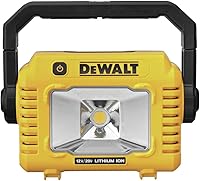
One naming detail matters: the compact DeWalt task light shown here uses model number DCL077B, despite the DCL510 display name above. Use DCL077B when checking batteries, mounts and instructions.
All 3 are sold without a battery. If you're still choosing a cordless setup, start with our guide to choosing a rechargeable work light.


Milwaukee vs DeWalt work lights: which fits your task?
Choose the light format first, then the battery platform. A spotlight suits a specific target, a compact task light suits nearby work and a flood light suits an area where you need room to move.
These models cover different jobs, so the highest score doesn't make the spotlight the right tool for every reader. A well-positioned flood light can be the better choice when your work spreads across several surfaces.
Before comparing features, picture your most common job. Note where you'll stand, what might block the beam and whether you have a shelf, tripod or secure hanging point nearby.
| Product | Best for | Output | Brightness settings | Positioning | Our score |
|---|---|---|---|---|---|
| DeWalt DCL043 20V MAX Spotlight | distant targets | 1,500 lumens | 2 | 90-degree pivoting head | 9.2 |
| DeWalt DCL510 12V/20V MAX Work Light | workbench repairs | Up to 2,000 lumens | 3 | Rotating handle and two tripod mounts | 8.9 |
| Milwaukee 2361-20 M18 LED Flood Light | hanging overhead | 1,500 lumens | Not specified | EMT, key hole, cross bar and handle hangers | 8.8 |
Which light should you buy or skip?
Buy the model that matches your usual placement and task, rather than a feature you might rarely use. Each option has a clear role, with tradeoffs that matter more than the brand name.
DeWalt DCL043: choose it for a specific target
The DCL043 suits someone who needs to direct light toward a particular spot, such as a distant part of a work area. Its spotlight format makes more sense for that job than for spreading light across a bench.
It produces 1,500 lumens and has a 90-degree pivoting head. You can aim it while it stands on its base, which helps when you need both hands free without holding the light.
Its 2 brightness settings let you choose between maximum output and longer run time. Use the lower setting when working nearby if the brighter setting creates glare from metal or pale surfaces.
DeWalt says the light can be seen from up to 508 yards, or 1,525 feet. That is a visibility claim, so don't use it as a working-distance target for detailed repairs.
Skip it as your main area light if you regularly move between several work surfaces. Our DeWalt DCL043 review covers its features, while the DCL040 vs DCL043 comparison helps narrow the choice between those DeWalt options.
Compact DeWalt task light: choose it for bench work
The compact DeWalt task light is the strongest fit here for repairs where you need to adjust the light around your hands. Its 360-degree rotating handle gives you several orientations without needing a different light format.
It reaches 2,000 lumens across 3 brightness settings and produces a natural daylight hue. Adjustable output is useful when you switch between a broad work surface and a small part close to the lamp.
The tool-only weight is 2.8 lb, making it worth considering if you'll carry it between work areas. Add the battery's weight when deciding how comfortable the full setup will be to move.
Choose it if a tripod solves your placement problem, especially when a crowded bench leaves little space for a light. Raising a lamp can also help keep tools and parts from blocking its beam.
Skip it if your main need is a directed spotlight, or if you're expecting a stand to come with the bare tool. Plan the support separately and check that it fits before buying mounting gear.
Milwaukee work light: choose it for a shared work area
The Milwaukee 2361-20 suits someone who wants to illuminate a work zone from a suitable hanging point. It's a practical choice for compatible M18 battery owners who want to keep a portable light off the work surface.
Its EMT, key hole, cross bar and handle hangers provide several placement methods. Those options are most useful when your workspace already has a secure support in the right position.
The octagonal shape allows use at multiple angles, giving you another way to aim it when hanging isn't practical. Milwaukee also uses a roll cage design that it describes as built for rough jobsite conditions.
Skip it if you need a tightly directed beam or specifically want the tripod mounts offered by the compact DeWalt. A hanger helps only when its location puts useful light on the task.
Milwaukee claims up to 8 hours of run time. Treat that as a planning reference, and arrange access to a charged compatible battery if stopping mid-job would cause trouble.
How much brightness do you need at the work surface?
Choose enough light to see edges and detail without glare, rather than using maximum output for every job. Beam placement can improve visibility more than a higher lumen count.
Lumens describe total light output. They don't tell you how much light reaches a bolt behind a bracket or how evenly a bench will be lit.
A close lamp may leave a bright patch while your hands cast deep shadows beside it. Move it back or sideways before deciding that the light lacks power.
For shiny parts, angle the beam so the reflection doesn't return straight toward your eyes. With an adjustable model, start lower and increase output only as needed.
For wiring or small assembly work, check visibility from your actual working position. A surface that looks bright while you're standing may fall into shadow once you lean over it.
A portable light should also complement the room's lighting. Keeping some background light on makes it easier to move safely between the task, your tools and the exit.
Which battery platform should you choose?
Choose a compatible battery family you already use unless another light solves a clear placement problem. Sharing batteries can simplify charging, storage and moving between tools.
The DCL043 uses DeWalt 20V MAX batteries. The compact DeWalt task light accepts DeWalt 12V MAX, 20V MAX and FLEXVOLT batteries.
The Milwaukee requires a compatible Milwaukee 18-volt battery, and its battery and charger are sold separately. Voltage numbers alone aren't a compatibility guide, so don't assume batteries can move between brands.
If you have no cordless equipment yet, think about the other tools you'll actually use. Choosing a whole platform around an occasional light may create extra charging equipment later.
Plan for the light and your power tools to need batteries at the same time. Sharing one pack can interrupt a repair if you must remove the light's power to run a tool.
Battery capacity, brightness and operating conditions affect cordless run time. For jobs with a firm finish time, begin with a charged pack and a way to recharge or swap it.
If battery ownership doesn't settle the choice, our best rechargeable work lights guide offers a wider comparison of portable formats.
How should you position a cordless work light?
Place the light beside or above your working line, where your body won't block it. Secure the support before adjusting the beam, and keep the setup clear of doors, moving parts and walking routes.
For bench work, start with the light to one side rather than directly behind you. Check the shadow from your dominant hand, then shift the lamp until you can see the contact point of the tool.
For a lower repair, avoid placing the lamp where a knee, foot or rolling tool could strike it. A clear floor position matters as much as the angle of the beam.
If hanging a light, use its intended hanger on a sound support. Don't improvise a hanging point from loose wire or a nearby moving part.
The compact DeWalt has 5/8 in-11 and 1/4 in-20 tripod mounts. Match the thread correctly, follow the support's load limits and spread the legs on firm, level ground.
Raise a tripod only as high as needed to clear the obstruction. Check the whole footprint, since a useful beam can still leave a stand in someone's path.
For more raised options, see our work lights with stands guide. Our work lights category guide covers other formats for different work areas.
What protection and care do these lights need?
Protect the lens, battery contacts and mounting points so the light remains easy to aim and use. Protective features help with particular hazards, but they don't remove the need for careful placement.
The DCL043 has an over-molded lens cover that DeWalt describes as adding durability. The Milwaukee has an impact-resistant, replaceable lens alongside its protective cage.
The compact DeWalt has an IP54 rating for dust and water ingress protection. Don't extend that protection claim to the other models or treat it as permission to submerge the light.
Before outdoor work, check the manual's allowed conditions and keep charging equipment in a suitable location. A light's water protection doesn't describe the protection of every battery, charger or accessory.
Switch the light off and remove the battery before routine cleaning, following its instructions. Wipe away dirt gently and avoid harsh cleaners or abrasive material that could scratch the lens.
Inspect hooks, handles and supports after transport or a knock. A cracked mounting part is a reason to stop using that placement method until the part is repaired or replaced as directed.
Store the light where loose tools won't strike the lens or press against its controls. Keep the battery and charger according to their own care instructions.
Which work-light mistakes cause the most trouble?
Avoid choosing by lumens alone or planning the support after the job starts. Most placement problems are easier to solve before the bench is covered with parts.
Putting the light behind your shoulders: your body can block the beam as soon as you lean forward. Position it with your working posture in mind, then check the task again.
Using maximum brightness close to reflective parts: glare can hide edges even when the area looks bright. Change the angle first, then reduce output if the model allows it.
Treating a hanging feature as a complete mounting plan: the support must be secure and place the beam correctly. Check where the light will hang before relying on that method.
Leaving charging until the battery is empty: a cordless light needs a power plan for longer jobs. Charge before starting and keep the next compatible pack available when needed.
Expecting one portable lamp to cover the whole garage: shelves, vehicles and your own movements can create large shadows. Use room lighting for general coverage and a work light for the task.
Which Milwaukee or DeWalt work light should you pick?
Choose the Milwaukee work light when you have compatible batteries and a useful hanging point for area lighting. Choose the DCL043 for directed light on a specific target, or the compact DeWalt for repairs that benefit from adjustable output and tripod placement.
For frequent bench work, decide where the lamp will sit before comparing output. For work that moves around a larger area, prioritize a mounting position that stays useful as you change posture and location.
Buy the battery, charging and support setup your work requires, rather than the light alone. If your garage is dim before you start a repair, use our guide to garage and workshop lighting to plan the background coverage.
Frequently asked questions
Are Milwaukee or DeWalt work lights better?
Choose Milwaukee for a flood light with several hanging options, or DeWalt for a directed spotlight or compact task light; among these models, battery compatibility and placement are the strongest deciding factors. Pick the light you can position securely around your usual work, rather than choosing by brand alone.
Which work light is brightest?
The compact DeWalt DCL077B task light has the highest maximum output here at 2,000 lumens; the DCL043 spotlight and Milwaukee 2361-20 flood light each produce 1,500 lumens. Choose by beam type as well as output: directed light and area lighting serve different tasks even when their lumen counts match.
Do these work lights come with a battery?
These 3 lights are sold without a battery, and the Milwaukee also excludes its charger; plan for compatible charging equipment before you start work. If you already own cordless tools, check the exact battery family against the light model; similar voltage labels across brands do not make batteries interchangeable.
Which light is better for hands-free use?
Choose the Milwaukee for several hanging methods, the compact DeWalt for tripod mounting, or the DCL043 for aiming from its base or a suitable hook position; the best choice depends on your available support. Keep the light secure and outside your walking path, with the beam aimed away from people's eyes.
Can a work light replace permanent garage lighting?
A cordless work light is useful for a repair or temporary work zone, but fixed ceiling lights are better suited to regular whole-garage coverage; use portable light to fill shadows at the task. Our garage lighting guide explains how to plan the room lighting around benches, vehicles and storage.