Plug-In vs Hardwired LED Shop Lights: Which Is Better? (November 2026)
Choose hardwired LED shop lights for a permanent ceiling layout or plug-in lights for easier moving and replacement. Hykolity suits a direct-wired installation, Sunco suits an outlet-powered layout, and Hyperlite offers adjustable output once you confirm its power connection.
On this page (8 sections)
- Plug-in vs hardwired LED shop lights: what is the difference?
- Which fixture suits your workspace?
- How should you plan coverage before buying?
- Can you link plug-in and hardwired lights?
- What should you check before installation?
- What mistakes cause poor results?
- How do you care for shop lights after installation?
- Which setup should you choose for your garage?
Choose hardwired LED shop lights for a permanent ceiling layout, or plug-in lights when you expect to move or replace fixtures more often. The connection method should fit your garage before you compare brightness or buy a multipack.
Hykolity is the direct-wired choice here, while Sunco suits an outlet-powered layout. Hyperlite offers selectable output and longer linked rows, but confirm its incoming power connection before choosing it for either setup.
Start with the power source, then plan coverage around your workbench, parked vehicles and storage. A bright fixture in the wrong position can still leave your hands working in shadow.
 Best for changing workspaces
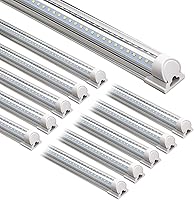
Sunco 4FT Plug-In Linkable LED Shop Lights 10-Pack

Plug-in vs hardwired LED shop lights: what is the difference?
The main difference is how power reaches the first fixture: a cord and outlet for plug-in lights, or a direct connection to building wiring for hardwired lights. That affects installation and future changes, not how bright the LEDs must be.
A plug-in light needs an accessible, suitable outlet within cord reach. Once securely mounted, it can usually be disconnected without opening an electrical enclosure, which helps when replacing a fixture or changing the room layout.
A hardwired light suits a settled ceiling plan with an appropriate wiring connection. Its fixed supply avoids a hanging outlet cord, though moving the fixture later may require electrical work.
Both types need secure mounting and suitable placement. Neither a plug nor a direct connection makes a light suitable for damp, outdoor or unusually dusty locations without the appropriate manufacturer approval.
Are hardwired LED shop lights brighter?
Hardwiring does not determine brightness; lumens describe light output. Compare output alongside fixture spacing, ceiling height and where you need to see detail.
Wattage describes power use, so buying the highest-watt fixture is not a reliable shortcut. A garage with several well-placed lights can have more useful coverage than one bright source behind your head.
For a starting point based on room size and use, read how many lumens you need in a garage. Then divide that coverage across the room rather than concentrating it all at the center.
Which fixture suits your workspace?
Choose Sunco for a layout you may rearrange, Hykolity for a permanent ceiling connection, or Hyperlite for selectable output across linked zones. Each solves a different planning problem.
Sunco: an outlet-powered layout you can rearrange
Sunco suits a garage with several work areas and suitable outlets, especially when bench positions may change. Its ceiling mounting and suspension options let you plan around overhead storage or place a row closer to a work surface.
The pack size makes sense when you already have a plan for multiple rows or rooms. Divide it into permitted groups instead of assuming every fixture in the box can share one continuous connection.
Skip this set if you need only one fixture or lack a safe outlet route. Adding ceiling outlets solely to accommodate plug-in lights can change the cost and effort enough to make direct-wired fixtures worth considering.
Sunco's brightness figures differ between its specifications and feature description, so confirm the exact output if your coverage plan depends on a precise total. The stronger reason to choose this set is its plug-in layout and mounting flexibility.
Hykolity: a permanent light over a settled work area
Hykolity suits a fixed workbench, utility area or garage ceiling where you want direct wiring. It is also the clearest choice here when a plug and cord would get in the way.
Its prismatic acrylic lens is designed to spread light across the work area. The neutral white tone suits a garage used for household tasks as well as repairs, especially if you prefer a less cool appearance.
The fixture uses 40W and measures 5.7 inches wide by 1.91 inches high. Check those dimensions against ceiling obstructions and the footprint of any old fixture you are replacing.
Skip it if you need outlet power, expect frequent moves or want confirmed linking between fixtures. Hykolity recommends professional installation, so include that work in your plan rather than treating it as a plug-in replacement.
Hyperlite: linked work zones with selectable output
Hyperlite suits a workshop where different areas need different light levels. Its selectable power settings let you choose output for the installed location without buying a different fixture for each zone.
Those settings correspond to 4,400, 5,500 and 6,600 lumens. Choose the level before closing up the installation, following Hyperlite's instructions for when and how to adjust it.
The included 59-inch linking cable helps connect nearby fixtures, but measure the actual route between their ports. Ceiling obstacles and turns can use more cable than a straight measurement suggests.
Skip it if you require a confirmed plug-and-play setup or a warmer light tone. Its 5000K color stays fixed as you change power, and its AC120V requirement alone does not explain the incoming connection.
How should you plan coverage before buying?
Plan where light must fall, then choose the number and position of fixtures. Measure the room and mark the workbench, vehicle spaces, shelves and garage-door travel before settling on a ceiling layout.
For bench work, avoid relying on a fixture directly behind where you stand. Your body can block the light, so arrange overhead coverage toward the work surface and consider separate task lighting for small parts.
For general garage use, spread fixtures across the space instead of building one bright row above the center aisle. Tall shelves and open vehicle hoods can create shadows even when the total lumen count looks sufficient.
Use our LED shop light spacing guide to plan the rows. If you have not chosen a fixture count, start with how many shop lights you need.
Choose color temperature for the room's main job
Pick 4000K for a more neutral appearance or 5000K for a cooler white appearance, based on your preference and nearby lighting. A higher Kelvin number does not mean greater light output.
Keep the color temperature consistent across a shared work area unless you have a clear reason to mix it. Different tones over adjacent benches can make the room look uneven.
Our guide to the best color temperature for garage lighting explains how to choose for repairs, hobbies and general use. Color temperature alone does not tell you how accurately a fixture renders paint or wire colors.
Can you link plug-in and hardwired lights?
You can link fixtures only when their design and instructions allow it. Linking describes the connection between lights; it does not tell you how the first fixture receives power.
Keep each row within the exact model's limit and use approved connectors. Do not combine brands simply because their plugs look similar, or assume a linking cable is suitable as a building-wiring connection.
Plan the start of every row near its approved power source. Also check whether the instructions impose limits based on selected wattage, total load or cable length.
For adjustable fixtures, plan the electrical load around the settings you intend to use. The ability to connect several lights does not remove the need to check the circuit and manufacturer limits.
A linked row can reduce separate supply connections, but it also makes placement more dependent on cable reach. Map the gaps first so you do not end up pulling connectors tight between fixtures.
What should you check before installation?
Confirm the power source, mounting surface and clearance before drilling or arranging electrical work. Having all three settled prevents buying lights that fit the room but cannot be installed where you need them.
- Power source: Identify suitable outlets or ceiling wiring connections, rather than assuming power is available above the workbench.
- Mounting surface: Choose fasteners appropriate for the ceiling material and fixture instructions.
- Clearance: Check the full path of garage doors, stored ladders and overhead racks.
- Controls: Decide whether the lights should operate together or serve separate work zones.
- Service access: Leave a practical way to reach covers, connectors and mounting points later.
Set up plug-in fixtures around safe cord routes
Mount the fixture securely before routing its cord. Keep the cord clear of sharp edges, hot surfaces and moving door hardware, without stretching it tight to reach an outlet.
Do not run a cord through a doorway or use a loose extension cord as a permanent wiring plan. If the outlet is poorly placed, have the power arrangement corrected or choose a fixture that suits the available connection.
Suspended lights need enough clearance for normal garage use. Our guide to how to hang LED shop lights covers the placement and mounting decisions to make before installation.
Prepare a hardwired installation before removing the old light
Have a qualified electrician assess the existing connection if you are not trained and permitted to do the work. Matching the old fixture's length does not confirm that the wiring, grounding or mounting arrangement is suitable.
Power must be disconnected at the circuit and verified off before electrical work begins. A wall switch alone is not a safe basis for handling conductors.
Keep electrical splices in the approved enclosure and follow the fixture instructions for grounding and cable entry. Do not bury connections above the ceiling or modify a fixture to accept an unapproved supply cord.
What mistakes cause poor results?
The most common mistake is choosing a connection type before planning the room. A plug-in fixture saves little effort if its only power source requires an awkward cord route.
Another mistake is putting every light on one control when the garage has separate uses. If you often work at one bench, plan whether that zone should operate without lighting the whole room.
Do not assume selectable wattage means wall-dimmer compatibility. A fixture with internal power settings still needs explicit dimmer compatibility before you connect it to a dimming control.
Avoid choosing indoor fixtures for wet or exposed areas without suitable approval. Also check the operating-temperature range for an unheated garage, since these products' suitability for extreme temperatures is not established here.
Finally, do not remove an old fluorescent fixture until you understand the replacement method. A complete LED fixture replacement differs from installing LED tubes in an existing housing, so confirm which job you are doing.
How do you care for shop lights after installation?
Keep lenses clean and connections accessible to preserve useful light and simplify maintenance. Dust on a cover reduces the light reaching your work surface, even when the LEDs still operate.
Disconnect power and let the fixture cool before cleaning it according to the manufacturer's instructions. Use a soft cloth and avoid spraying liquid into seams, ports or electrical parts.
During routine garage cleanup, look for loose mounts, damaged cords or connectors strained by stored items. Stop using a damaged fixture until the fault is addressed.
If a light begins to flicker, do not assume it needs a higher output setting. Check for a control or supply problem through an appropriate repair process rather than repeatedly switching it on and off.
Which setup should you choose for your garage?
Choose hardwired LED shop lights when your work zones are settled and a direct connection fits the room. Choose plug-in fixtures when suitable outlets already exist and easier disconnection matters.
Pick Sunco for several outlet-powered zones and mounting flexibility. Pick Hykolity for a permanent work area, or Hyperlite when selectable output and longer linked rows justify confirming its power connection first.
Before ordering, write down the fixture positions, supply points and control groups on one simple room sketch. That plan will reveal more installation problems than comparing wattage alone.
For the next step, use how to choose LED shop lights for a garage to match fixtures to your work. The complete garage and workshop lighting guide connects those choices to the rest of the room.
Frequently asked questions
Are hardwired shop lights better than plug-in lights?
Hardwired shop lights are better for a permanent layout with suitable ceiling wiring, while plug-in lights suit spaces you may rearrange. Neither connection type guarantees brighter light; compare lumens, light distribution and mounting height after choosing the power connection that fits your garage and installation plans.
Can you plug in a hardwired LED shop light?
Use a plug-in connection only when the manufacturer explicitly allows it for that fixture. The Hykolity wraparound requires direct wiring and cannot use a plug-in setup; adding a cord is not a general solution for hardwired lights; choose an outlet-powered fixture if that is how you need to supply power.
Can plug-in shop lights be linked together?
Yes, compatible plug-in shop lights can share a linked row within the manufacturer's limit. Sunco supports up to 4 fixtures per chain; use the approved connectors and follow the instructions for the exact model; a similar connector shape does not guarantee compatibility between different lights.
Do hardwired LED shop lights need an electrician?
Use a qualified electrician if you are not trained and legally permitted to make the connection. Hykolity recommends professional installation for its wraparound; an electrician can also assess existing wiring, circuit capacity, grounding and the connection enclosure before you commit to a permanent fixture layout.