How to Replace Fluorescent Shop Lights With LED
To replace fluorescent shop lights with LED, choose tubes approved for your exact ballast, have the fixture converted for ballast-bypass tubes, or install a complete LED fixture. Turn off power at the breaker and verify it is off before work; use a qualified electrician for rewiring if you aren't trained.
On this page (7 sections)
- How do you replace fluorescent shop lights with LED?
- What should you check before ordering LED replacements?
- Which replacement tubes or fixtures suit your shop?
- How much light and which color should you choose?
- What does each installation route involve?
- What mistakes cause trouble after an LED conversion?
- Which route should you choose to replace fluorescent shop lights with LED?
To replace fluorescent shop lights with LED, choose compatible replacement tubes, convert the fixture for ballast-bypass tubes, or install a complete LED fixture. The right route depends on the ballast, socket condition, and wiring work you're prepared to arrange.
How do you replace fluorescent shop lights with LED?
Identify the existing fixture before buying anything, then choose one of 3 replacement methods. Tube length alone cannot tell you whether an LED lamp will work safely.
| Method | What stays | Who it suits |
|---|---|---|
| Type A, ballast compatible | Housing, sockets, and approved ballast | Buyers keeping a working, compatible fixture |
| Type B, ballast bypass | Sound housing and suitable sockets | Buyers arranging a wired conversion |
| Complete LED fixture | Only suitable mounting points and power connection | Buyers replacing damaged fixtures or changing the layout |
For any route, switch off the circuit at the breaker and verify power is off with a suitable tester before opening the fixture. A wall switch alone isn't enough.
Keep fluorescent tubes intact during removal and take them to an appropriate local recycling or collection service. They contain mercury and need more care than ordinary household bulbs.
What should you check before ordering LED replacements?
Record the lamp markings, fixture condition, and exact ballast model. These details determine whether replacement tubes are practical or a new fixture makes more sense.
Measure the tube length and count how many lamps each fixture holds. Photograph accessible labels so you can compare model numbers without repeatedly climbing a ladder.
If the ballast label is behind a cover, isolate and verify power before removing it. Don't assume all fixtures in the same garage contain matching ballasts.
Check for cracked sockets, brittle insulation, corrosion, or heat damage. A qualified electrician should assess damaged electrical parts before you spend money converting the housing.
Also note how each light gets power and where its switch sits. A replacement with a cord needs a suitable receptacle; an existing hardwired feed doesn't become a plug connection without appropriate work.
Which replacement tubes or fixtures suit your shop?
Choose JESLED to retain a compatible ballast, Sunco for a planned bypass conversion, or Barrina to replace the fixture. Each solves a different installation problem.
Can you replace fluorescent shop lights with LED and keep the ballast?
JESLED fits buyers with a sound fixture and a confirmed compatible ballast. Its Type A+B design supports ballast operation or a bypass conversion, giving you a choice of installation methods.
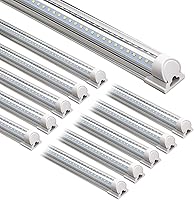
The JESLED 4FT T8 Type A+B LED Tubes draw 24 W each and produce 3,200 lumens at 6000K. This is the cooler light choice among these products, so consider it for work areas where you prefer a crisp white appearance.
Check JESLED's compatibility list against the full ballast model number. These tubes do not support dimming ballasts, so skip them if you intend to keep one.
For bypass installation, JESLED supports single-ended or double-ended power when wired as directed. That flexibility doesn't make it safe to insert the tubes into an unknown converted fixture.
Choose this 4-pack when you have a small group of suitable fixtures to update. Skip the tube route if the old sockets or housing need substantial repair.
When should you choose Sunco ballast-bypass tubes?
Sunco suits buyers converting several sound fluorescent fixtures and arranging the required rewiring. Its 10-pack makes sense when you have enough compatible lamp positions to use the tubes.
The Sunco 10-Pack T8 Ballast Bypass LED Tubes use a single-sided Type B connection. Each tube draws 18 W and produces 2,200 lumens at 5000K.
Sunco requires all existing ballasts to be removed before installation. Have the installer follow its diagram and confirm the socket requirements, rather than assuming the old sockets can stay unchanged.
These tubes are non-dimmable, so skip them for a setup where dimming matters. They're also the wrong choice if your goal is simply to swap lamps without electrical work.
Bypassing a ballast removes that component from future maintenance, but conversion adds labor now. Our guide to whether LED shop lights need a ballast explains the tradeoff.
When should you replace the whole fixture with Barrina?
Barrina suits buyers replacing worn fixtures or moving lights to better positions. It replaces the fluorescent housing, sockets, and ballast instead of adapting them.
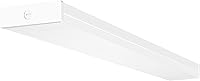
The Barrina T8 4FT LED Shop Lights 2-Pack includes complete lights with a switched power cord or a hardwired installation option. Each light draws 40 W and produces 5,500 lumens at 5000K.
Barrina allows up to 6 units to connect in series using 48-inch connecting cables. Plan around that spacing and use compatible connectors; mixing new and older Barrina lights requires the new male-female connector cables.
Choose the corded option when suitable outlets are already within reach. Skip this approach if you want to preserve the existing fluorescent fixtures and replace only their lamps.
These are indoor fixtures. Their clear covers also deserve attention when positioning lights, since an exposed bright source in your normal sight line can be uncomfortable.
How much light and which color should you choose?
Compare lumens for the whole fixture, then check where that light will land. Watts describe electrical use, while lumens describe light output.
A replacement tube's output is per tube, so add the outputs when comparing a multi-lamp fixture with one complete LED light. That total is a starting point because covers, reflectors, mounting height, and placement also affect useful light.
Don't assume the old fixture locations are ideal. Shelves, open garage doors, and your body can block overhead light from reaching a bench.
Use how many shop lights you need to plan quantity and LED shop light spacing to distribute them. More output from one position won't remove every shadow.
Match color temperature across nearby fixtures unless you have a reason to separate work zones. Our guide to the best color temperature for garage lighting explains how different white tones affect the space.
What does each installation route involve?
Compatible tube replacement keeps the ballast, bypass conversion changes the wiring, and fixture replacement changes the housing. Keep these jobs distinct so you don't treat every LED tube as interchangeable.
Installing compatible plug-and-play tubes
With power isolated and verified off, remove the cover and old lamps according to the fixture instructions. Fit the approved LED tubes in the required orientation without forcing them into the sockets.
Refit the cover before restoring power. A plug-and-play tube still depends on its ballast, so an aging ballast remains a possible source of future trouble.
Arranging a ballast-bypass conversion
Use a qualified electrician if you aren't trained to identify sockets and make the required connections. Single-ended and double-ended power layouts differ, and shunted versus non-shunted socket requirements must match the tube instructions.
Have the installer apply any required conversion labels and retain the wiring instructions. Future lamp replacements must match the converted fixture, not its old fluorescent label.
Our guide to wiring and linking LED shop lights safely covers connection choices in more detail.
Mounting a complete replacement fixture
Support the old housing before loosening its mounting hardware. Have hardwired connections disconnected and remade by a qualified electrician if you aren't trained for that work.
Mount the new light to suitable supports using the specified hardware. Route cords and linking cables away from sharp edges, moving doors, and stored items that could snag them.
What mistakes cause trouble after an LED conversion?
The biggest mistakes are guessing compatibility, ignoring damaged sockets, and putting light in the wrong place. Check electrical fit and room coverage separately.
Avoid these shortcuts:
- Buying by “T8” alone without checking ballast compatibility or bypass requirements.
- Installing Type B tubes into a fixture that still has its ballast connected.
- Assuming all LED tubes use the same powered end.
- Mixing incompatible linking cables or exceeding a fixture's connection limit.
- Replacing every fixture at once before checking the planned light placement.
Before restoring power, confirm secure mounting, seated lamps, closed covers, and correct electrical connections. Switch off the breaker if you notice sparks, a burning smell, unusual noise, or repeated flicker.
For ongoing care, disconnect power and let lights cool before cleaning covers as directed. Keep conversion labels readable and retain the replacement tube model number so future maintenance doesn't become guesswork.
Which route should you choose to replace fluorescent shop lights with LED?
Keep a compatible ballast for the simplest lamp swap, arrange bypass work for sound housings, or replace worn fixtures completely. Knowing how to replace fluorescent shop lights with LED starts with that decision, before comparing brightness.
Pick JESLED when its compatibility list includes your ballast and you want to retain it. Pick Sunco when you're committed to a single-sided bypass conversion and can use the larger pack.
Pick Barrina when you want complete fixtures with corded or hardwired installation options. Compare LED and fluorescent shop lights if you're still weighing the switch.
For the next step, use how to choose LED shop lights for a garage to narrow your fixture needs. The broader garage and workshop lighting guide can help you plan overhead and task lighting together.
Frequently asked questions
Can I replace fluorescent tubes with LED tubes without rewiring?
Yes, if the LED tube supports the exact ballast in your fixture; Type A tubes use a compatible ballast, while Type A+B tubes can offer that option too. Match the ballast model to the manufacturer's compatibility list before buying; matching tube length and socket shape isn't enough.
Do I need to remove the ballast when installing LED tubes?
Type B tubes require ballast bypass, while Type A tubes keep a compatible ballast in use; Type A+B tubes support either method when installed as directed. Sunco requires existing ballasts to be removed for these Type B tubes, so the installer must follow Sunco's wiring diagram and socket requirements.
Is it safer to replace the whole fluorescent fixture?
A complete replacement avoids adapting old fluorescent sockets and ballast wiring, but safety still depends on correct mounting and electrical connections; replacement makes sense when the housing or sockets are damaged. Have a qualified electrician assess damaged wiring and handle hardwired connections if you aren't trained for that work.
What should I check before turning on new LED shop lights?
Check that mounting hardware and covers are secure, tubes are seated correctly, and no bare conductors are exposed; the installer should verify electrical connections against the instructions. Clear tools before restoring power, then switch off the breaker if you notice flicker, sparks, unusual noise, or a burning smell.